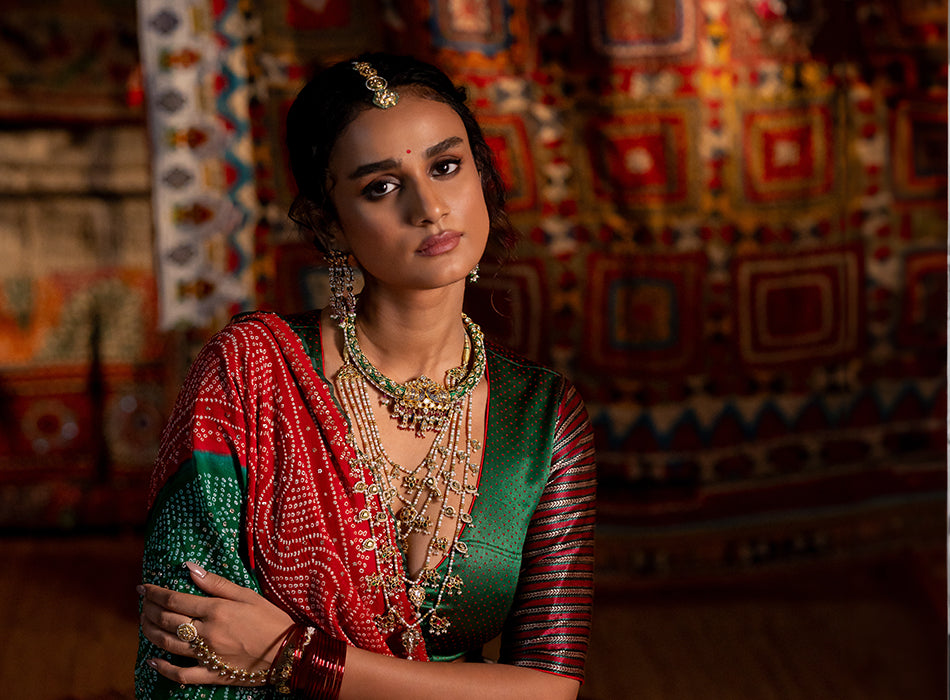


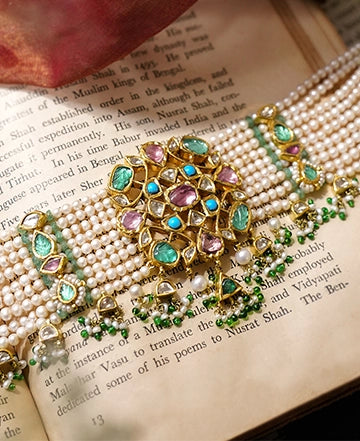
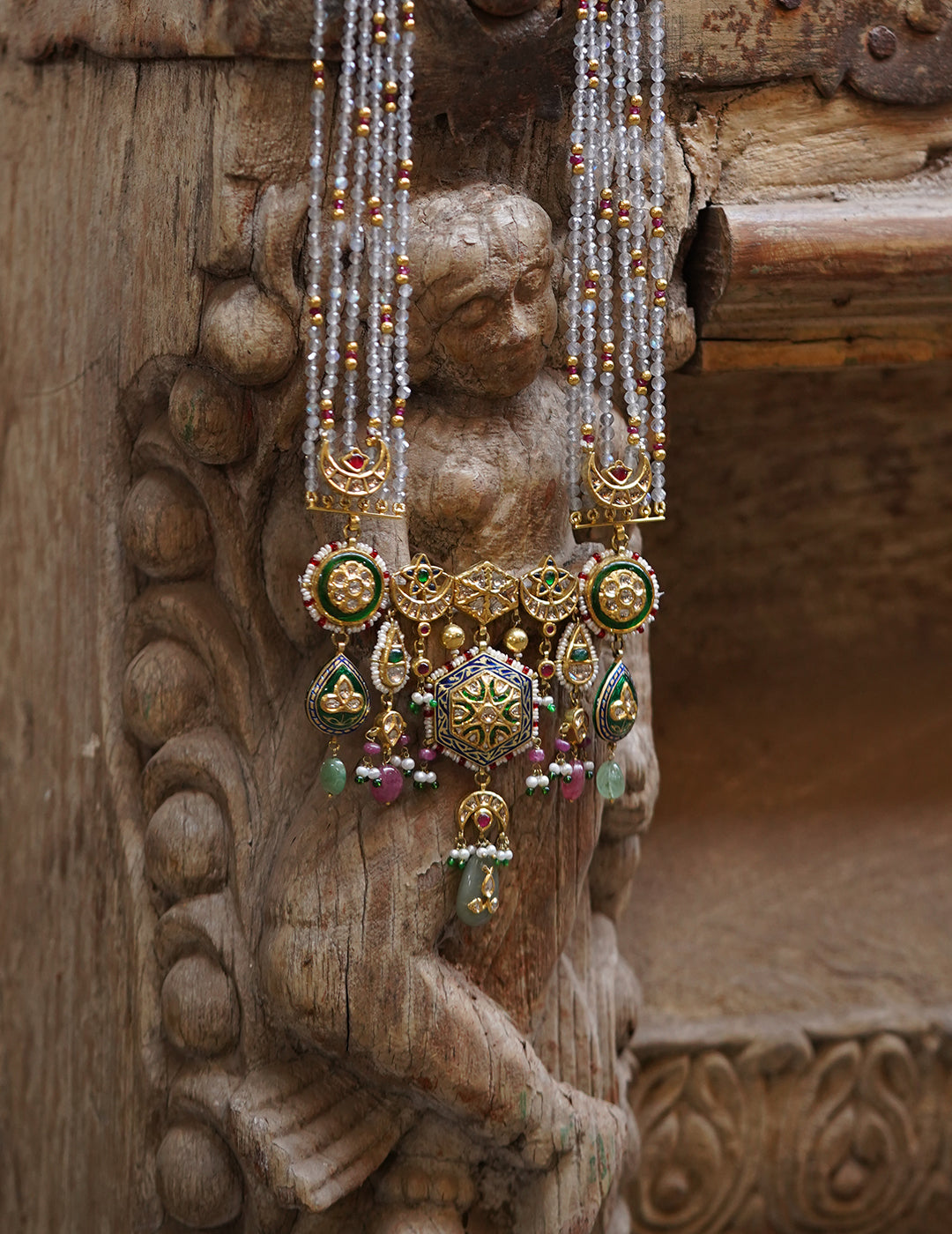
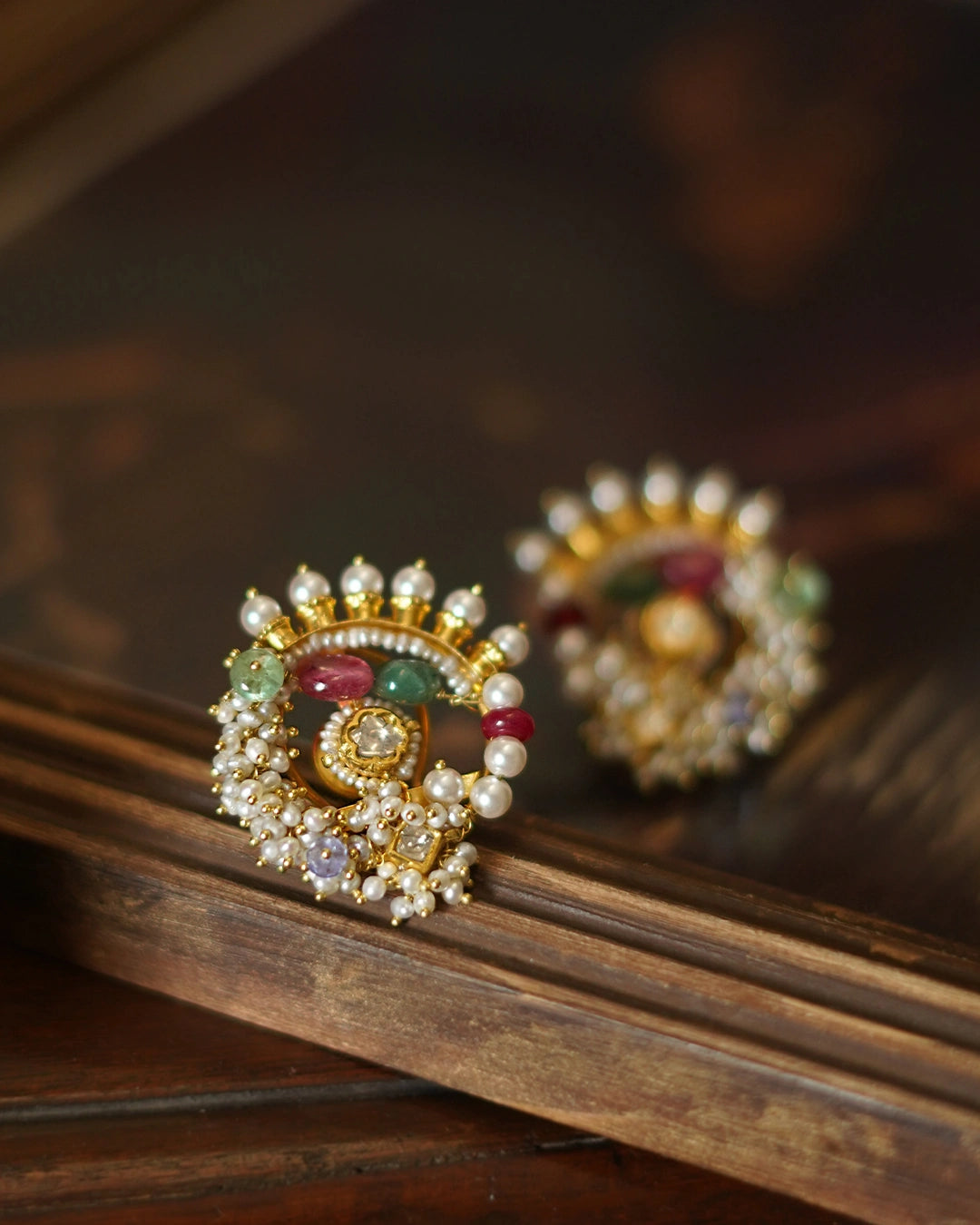






Artisanal wedding jewellery
For the bride who refuses to choose a template
In today’s age of a choice platter what makes you an original?
A private bridal experience built around a thoughtfully designed journey.
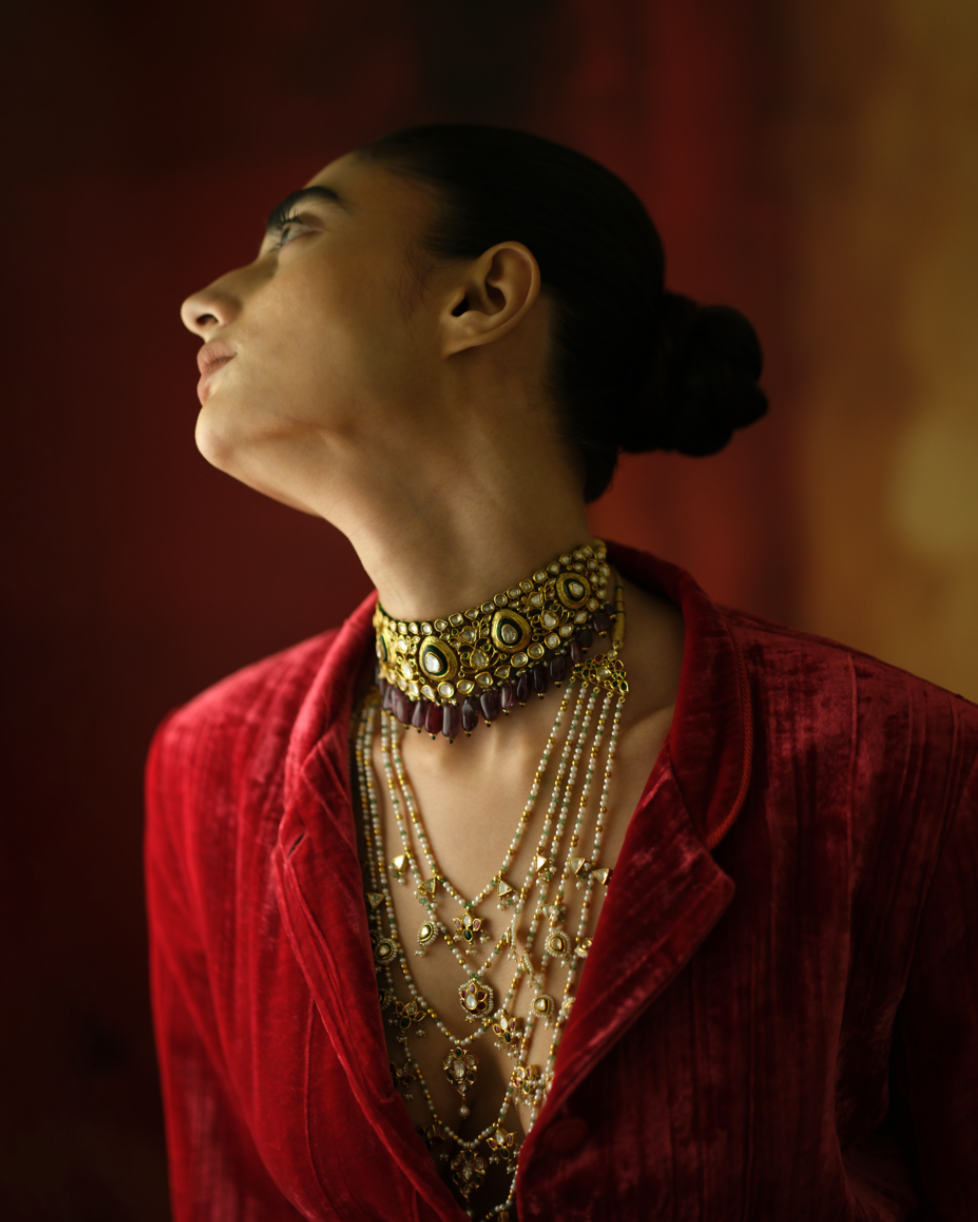
your wedding,
a version of you
of your beliefs, of your choices
Bring your references. Your moodboards. Your outfits. Your mother. Your uncertainty. We start from wherever you are.
We come in as your partners, to present your authentic story in the way that comforts you, in co-creating bridal jewellery trousseau that feels like a natural extension of your vision and being. Styling becomes a key factor that bridges your outfits, occasions, personality and jewellery.
The designer and co-founder, Puja realises each bride with their own derivative meanings. A trained jewelry designer from FIT, New York, with experience at The Brooklyn Museum of Art and The Metropolitan Museum of Art in NYC before starting her fine jewelry studio in Ahmedabad, India.
Discover the Collection


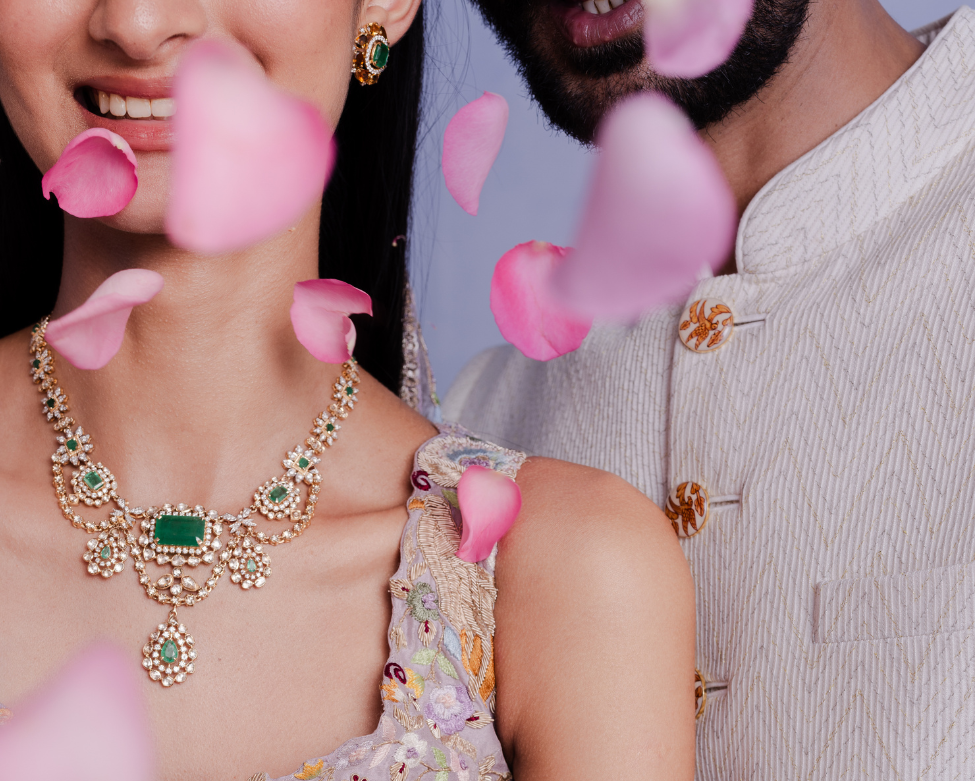
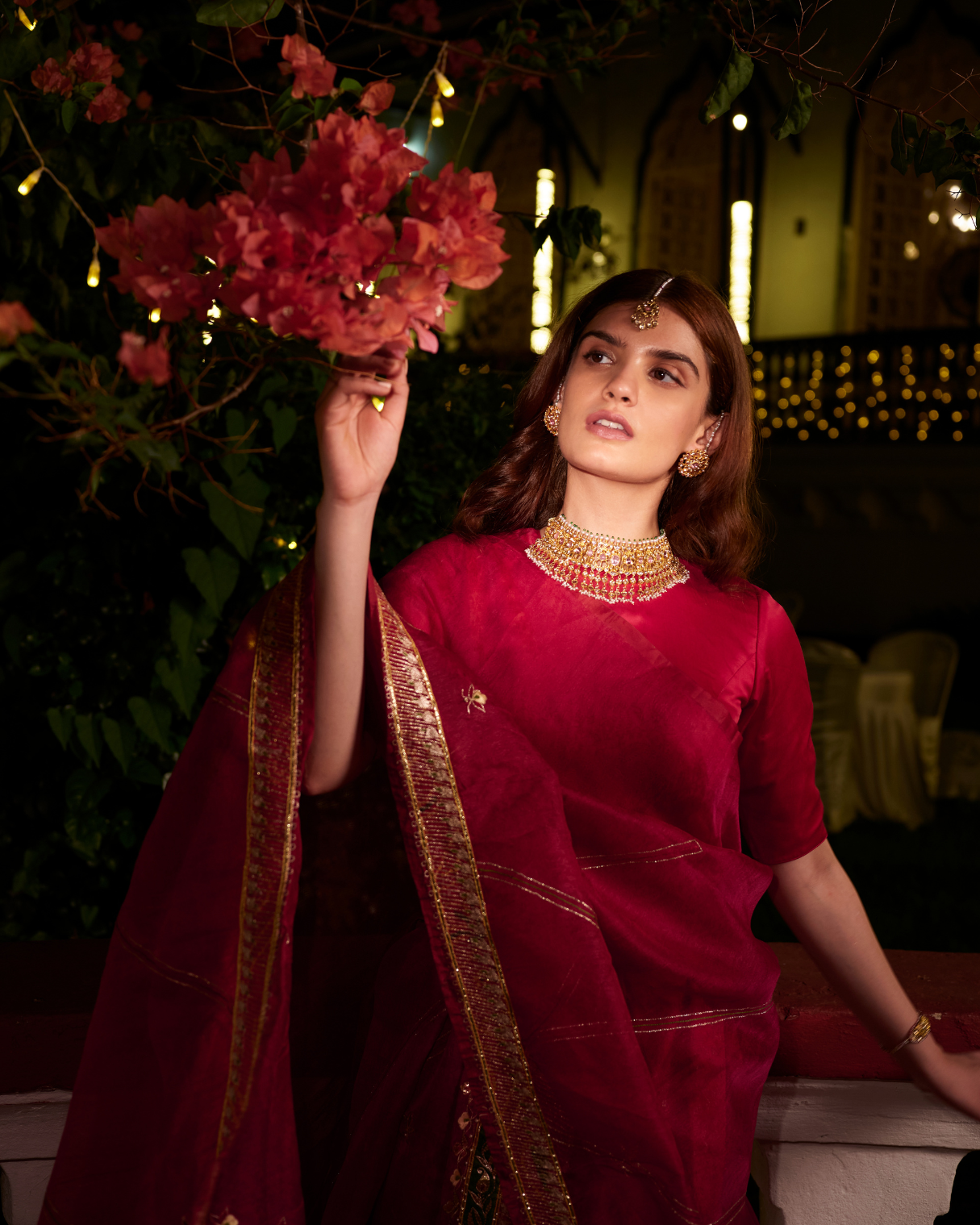
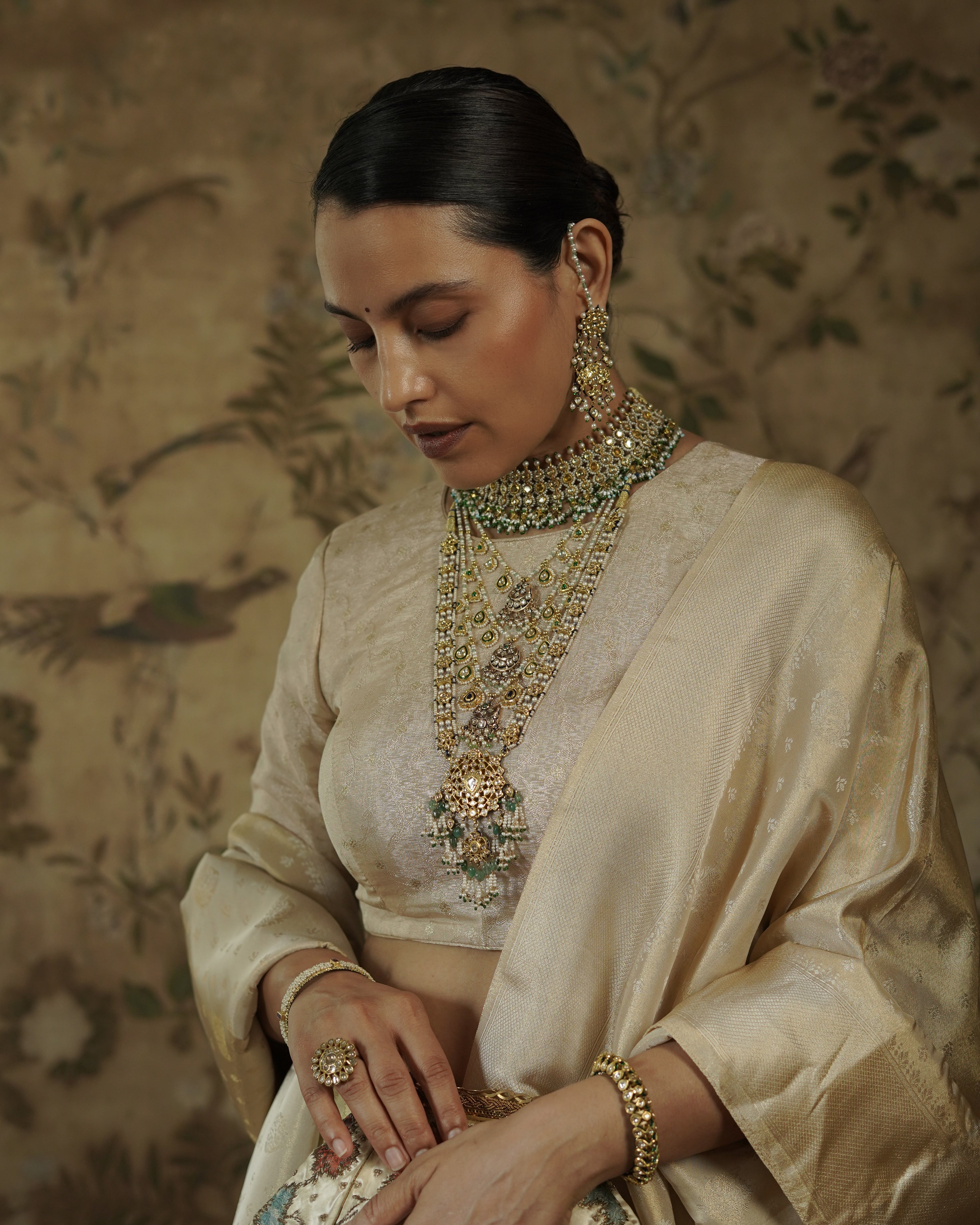
Not a template.
created with
your taste,
your picks,
your comfort
A guided and accessible approach to
commissioning bridal fine jewellery.

why bespoke?
I am doing a Safari wedding,
but - I want to pay an homage to my Indian roots,
but - I want the feel to be modern,
but -I want exotic bird and animal motifs, to carry my memories of growing up in Africa,
but - I want my jewellery to be the star of my look,
but - I also want the jewellery to be wearable later in my life”
now this is a puzzle to be solved..

Testimonials from the Aurus bride

"When it came to curating my bridal jewellery, the goal was never about making a traditional bridal statement. It was about choosing pieces that would feel right, elegant and completely me."
Read More
"When it came to curating my bridal jewellery, the goal was never about ma...
Gauri Spratt and Aamir Khan

"Rather than creating jewellery that simply completed the look, I wanted each piece to feel as though it belonged to my story - timeless, heirloom-inspired, and gathered across generations.”
Read More
"Rather than creating jewellery that simply completed the look, I wanted e...
Devanshi Amin

"What began as conversations about colour, flowers, travel and collected pieces gradually transformed into jewellery that felt deeply familiar. Nothing felt imposed. Nothing felt disconnected from who I am."
Read More
"What began as conversations about colour, flowers, travel and collected p...
Anushri Patel
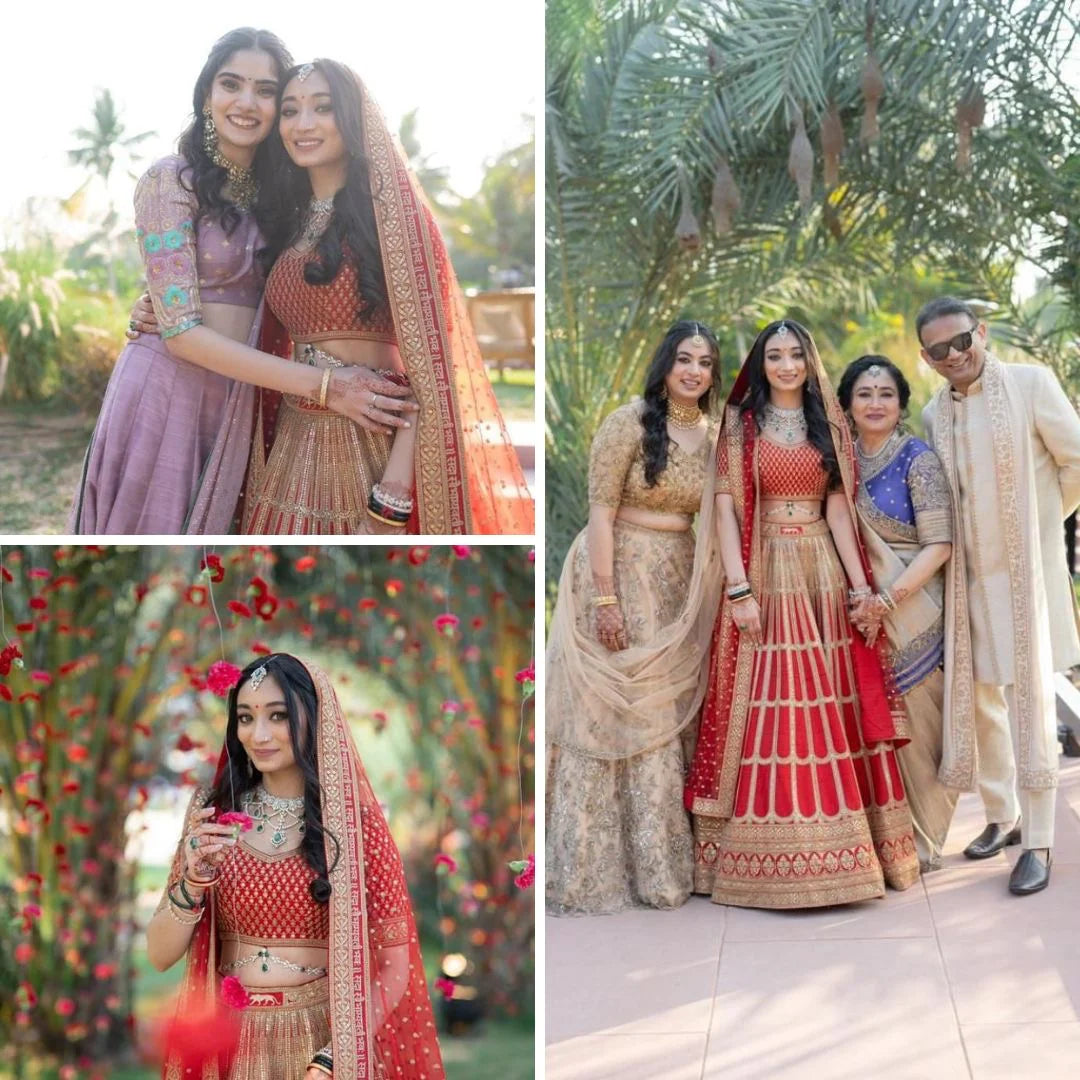
"I wanted a piece that would feel unforgettable without feeling excessive. I already owned remarkable jewellery, so this commission had to offer something different - something that blended the brilliance of diamonds with the soul of traditional Indian craftsmanship."
Read More
"I wanted a piece that would feel unforgettable without feeling excessive....
Kanha Bakeri
"When it came to curating my bridal jewellery, the goal was never about making a traditional bridal statement. It was about choosing pieces that would feel right, elegant and completely me."
Read More
Gauri Spratt and Aamir Khan
"Rather than creating jewellery that simply completed the look, I wanted each piece to feel as though it belonged to my story - timeless, heirloom-inspired, and gathered across generations.”
Read More
Devanshi Amin
"What began as conversations about colour, flowers, travel and collected pieces gradually transformed into jewellery that felt deeply familiar. Nothing felt imposed. Nothing felt disconnected from who I am."
Read More
Anushri Patel
"I wanted a piece that would feel unforgettable without feeling excessive. I already owned remarkable jewellery, so this commission had to offer something different - something that blended the brilliance of diamonds with the soul of traditional Indian craftsmanship."
Read More
Kanha Bakeri
FAQs
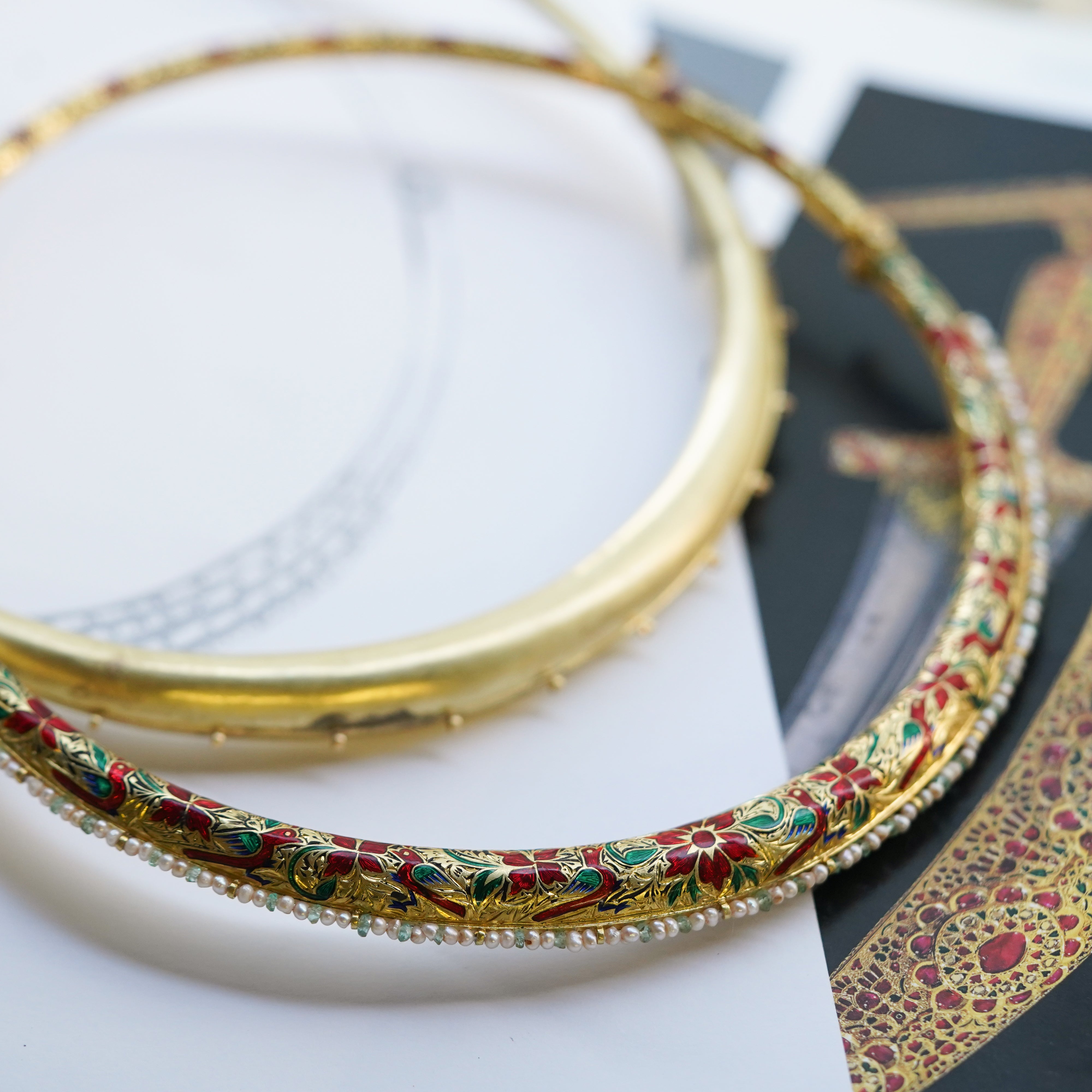
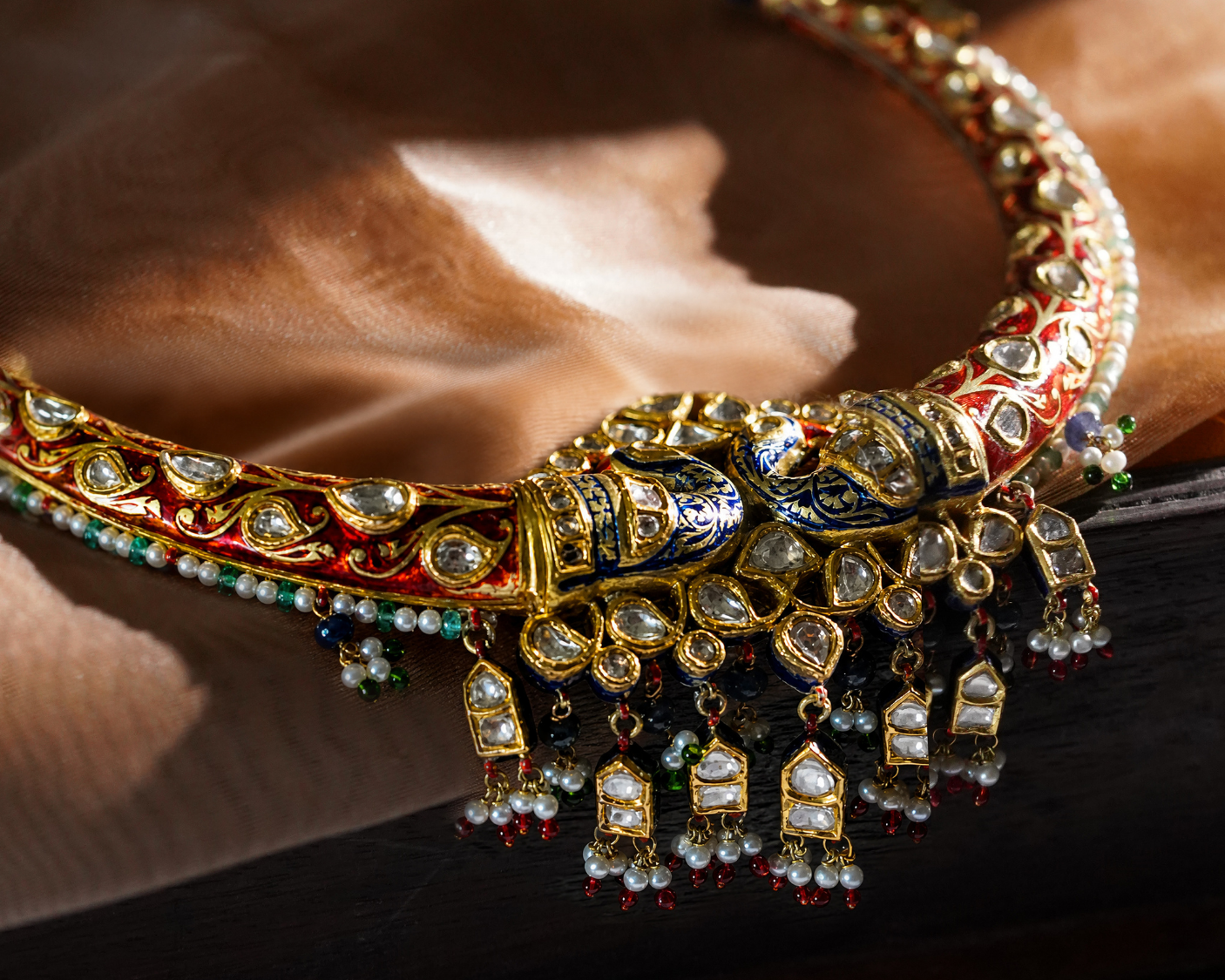
There is no single way to dress an Indian bride. Across the country, bridal jewellery varies with the landscape, the community, and the family's traditions. In Gujarat and Rajasthan, the sculptural hasli - a rigid gold collar - sits close to the neck; in Maharashtra, the thushi, a choker of hundreds of closely woven gold beads, is unmistakable. Brides in Andhra Pradesh and Telangana wear the guttapusalu, a necklace finished with tiered pearl fringes, while in Hyderabad the satlada, a seven-strand pearl necklace from the Nizami courts, creates a sense of layered abundance. Each carries the visual language of its place of origin, making Indian bridal jewellery as much a record of regional culture as an expression of beauty.
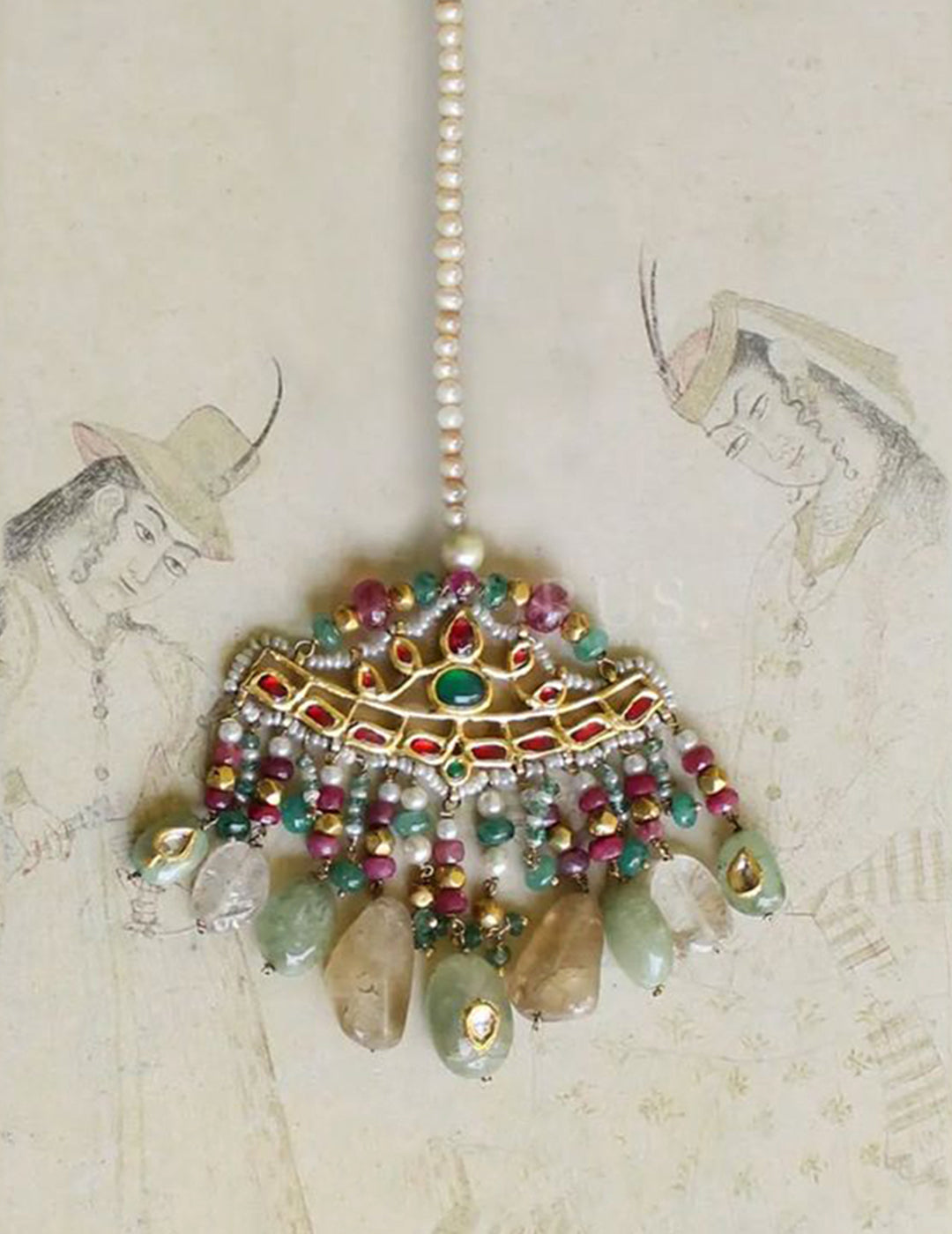
A traditional bridal trousseau may include a maang tikka at the parting, a choker and long necklace worn together, earrings, a nath, bangles, a haathphool linking ring to bracelet, rings, a kamarband at the waist and payal at the ankles - each piece carrying its own symbolism of prosperity, protection, love and companionship. These jewels sit within the bride's solah shringar, the sixteen traditional adornments of an Indian bride, which also include mehendi, sindoor, kajal and hair flowers alongside the jewellery.
Today, few brides follow all sixteen in the same way. Some layer an heirloom jadau necklace with a contemporary diamond piece; others choose a single statement jewel and let it carry the look. What matters is not completing a checklist but choosing pieces with enough meaning to outlive the occasion - jewels that can move from the wedding day into the family story, and perhaps one day, into another bride's.
Some of the most meaningful bridal jewels begin not with a design, but with a story.
Perhaps it is a grandmother's necklace that has travelled through generations, a particular stone that has always held a place in the family, or simply an image of the wedding that exists in your mind long before the invitations are sent. At Aurus, these fragments become the starting point for a custom bridal jewellery piece that is uniquely yours.
Commissioning a bespoke piece is an invitation to bring these memories, references and dreams to the table. Together, we explore what you want your jewellery to say about you - the traditions you want to hold close, the details you want to reinterpret, and how you imagine wearing them long after the wedding is over.
An heirloom may be reset and reimagined for a new chapter. A centuries-old motif may find a contemporary expression. Or an idea that exists only as a sketch, a photograph, or a feeling may slowly take form in gold and gemstones, shaped by hand in our Jaipur and Ahmedabad workshops.
Because for us, bespoke bridal jewellery is not simply about making something no one else owns. It is about creating a piece with a sense of belonging - one that remembers the occasion it was made for and, perhaps one day, becomes a memory for someone else.
After all, wedding jewellery is more than what a bride wears on a single day. It is a material memory of the day, and part of the legacy she carries forward.
There is a certain poetry to the way Indian brides have always chosen their jewels. Jewellery was never simply about what caught the light; it was a way of carrying home, heritage and memory into a new chapter. That relationship with tradition remains, even as the choices have become far more personal. Aurus describes the modern bride in much the same way - rooted in where she comes from, but unafraid to reinterpret it in her own language.
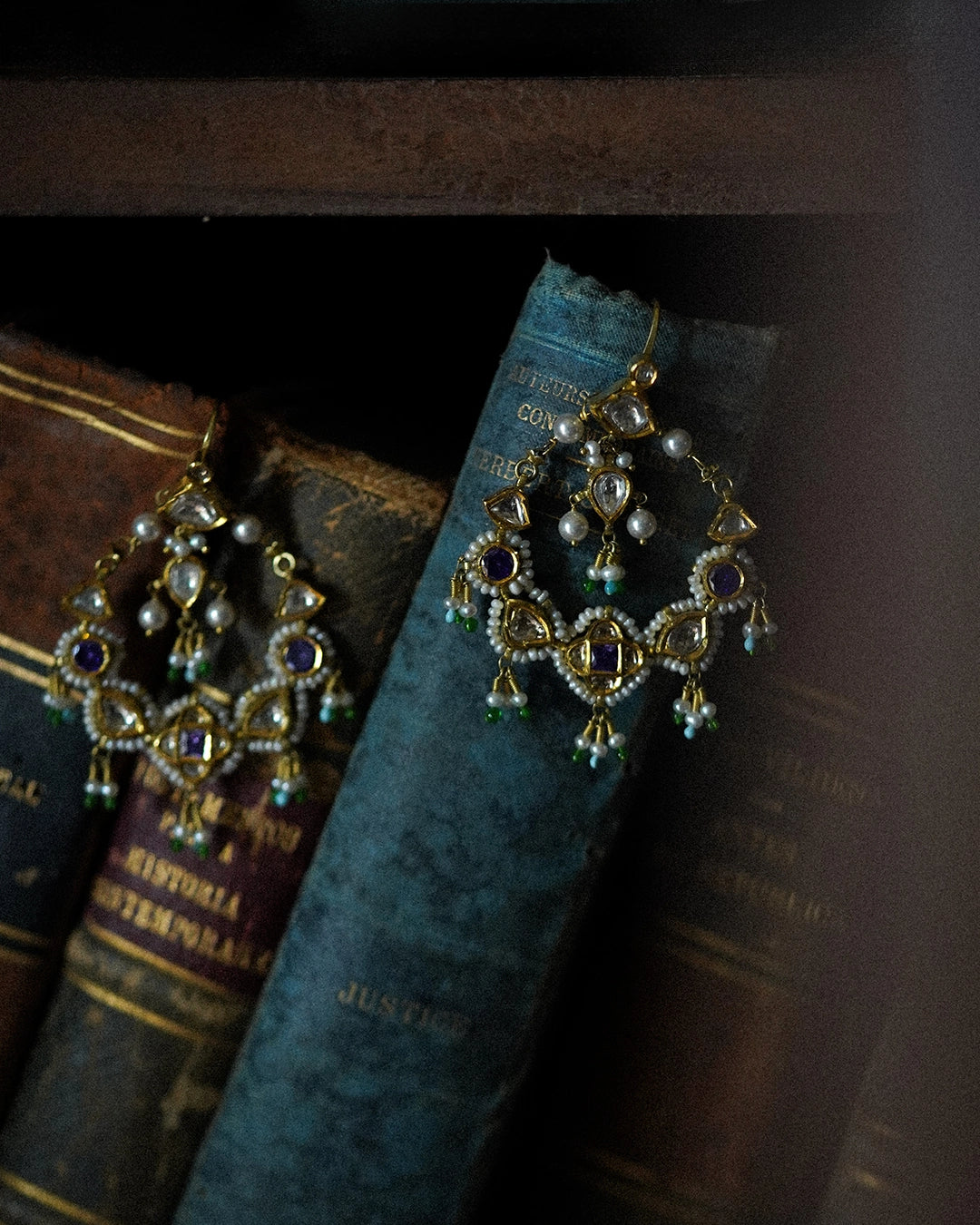
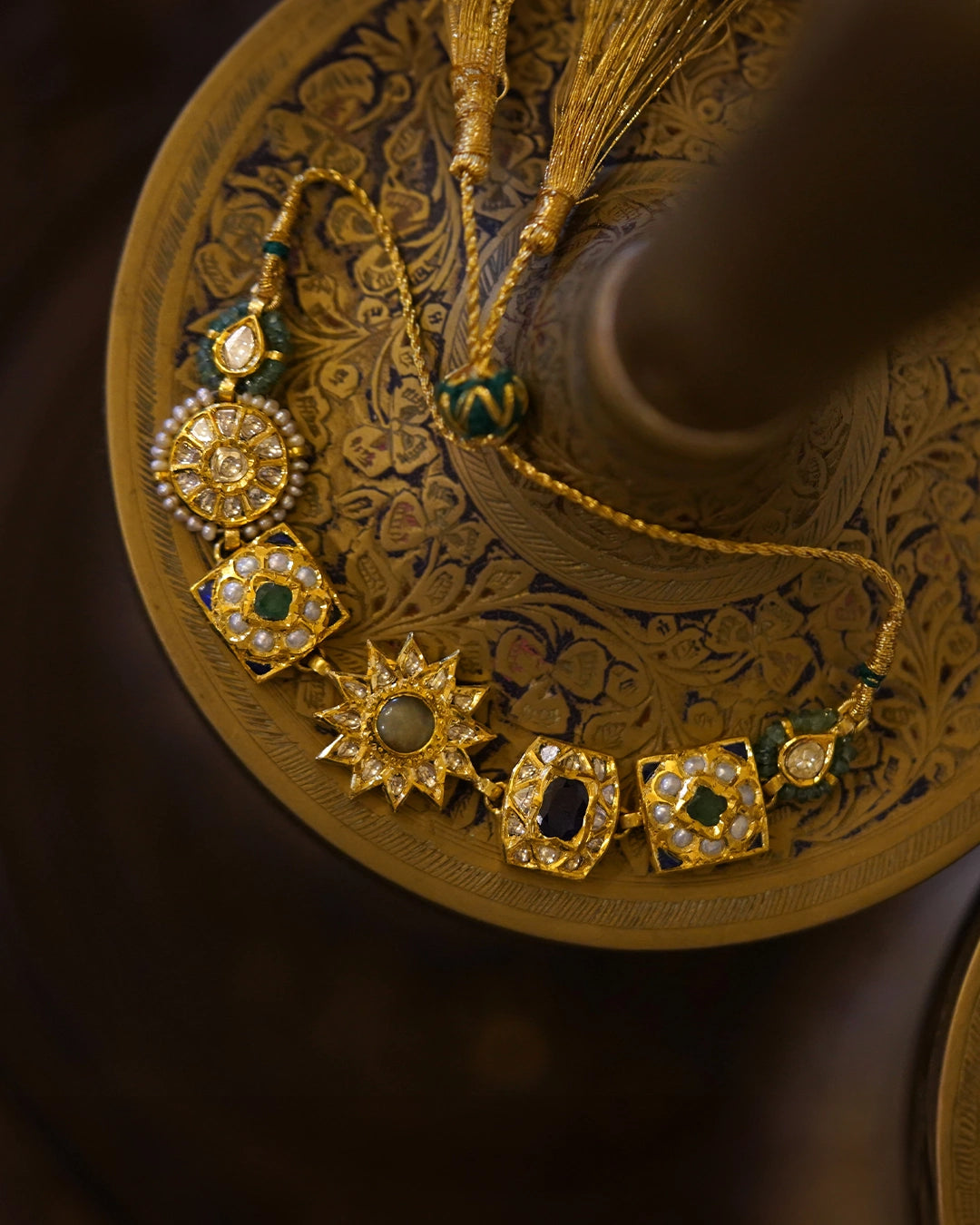
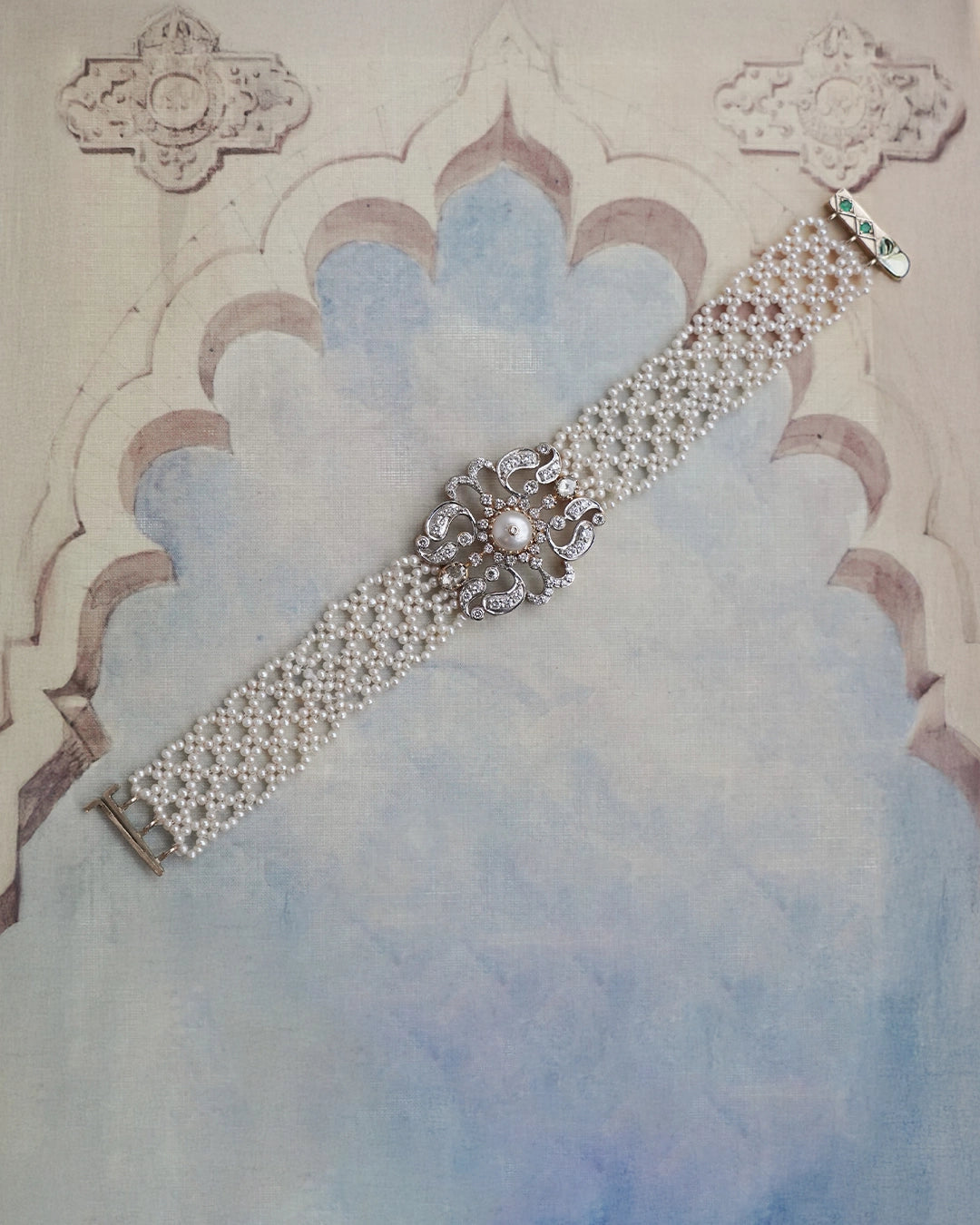
Gold, jadau and diamonds each tell a different story. Gold carries the warmth and familiarity of an Indian heirloom. Jadau is the traditional Indian technique of setting uncut diamonds and gemstones into pure gold, held in place by fine gold foil rather than prongs - a craft passed down through generations of karigars. Polki, the naturally irregular uncut diamond used in jadau work, has a softer play of light and a character especially suited to bridal jewellery. Diamonds, by contrast, offer a more precise brilliance and an ease that allows them to move beyond the wedding itself.
A bridal look does not have to belong entirely to one world. A bride might wear a richly layered jadau necklace for the wedding ceremony, then turn to diamonds for the reception, or place a contemporary diamond piece alongside an inherited polki jewel. This dialogue between old and new is increasingly at the heart of the modern Indian bridal aesthetic.
So the better question may not be gold, jadau or diamonds - but what do you want your jewellery to remember? Choose the pieces that feel instinctively yours, the ones that speak to your clothes, your traditions and your sense of beauty. Because the finest bridal jewel is not the one that completes the wedding look. It is the one that, years later, still brings you back to the woman you were when you first wore it.
There is a moment in every bride's wedding journey when the lehenga has finally been chosen. The embroidery is right, the colour feels like her, and she can already see herself in it. Then comes the more delicate question: what jewellery goes with a bridal lehenga?
The answer is not to match everything exactly. The most beautiful bridal looks are built on harmony rather than perfect coordination - jewellery that echoes the mood, richness and character of the lehenga without competing with it.
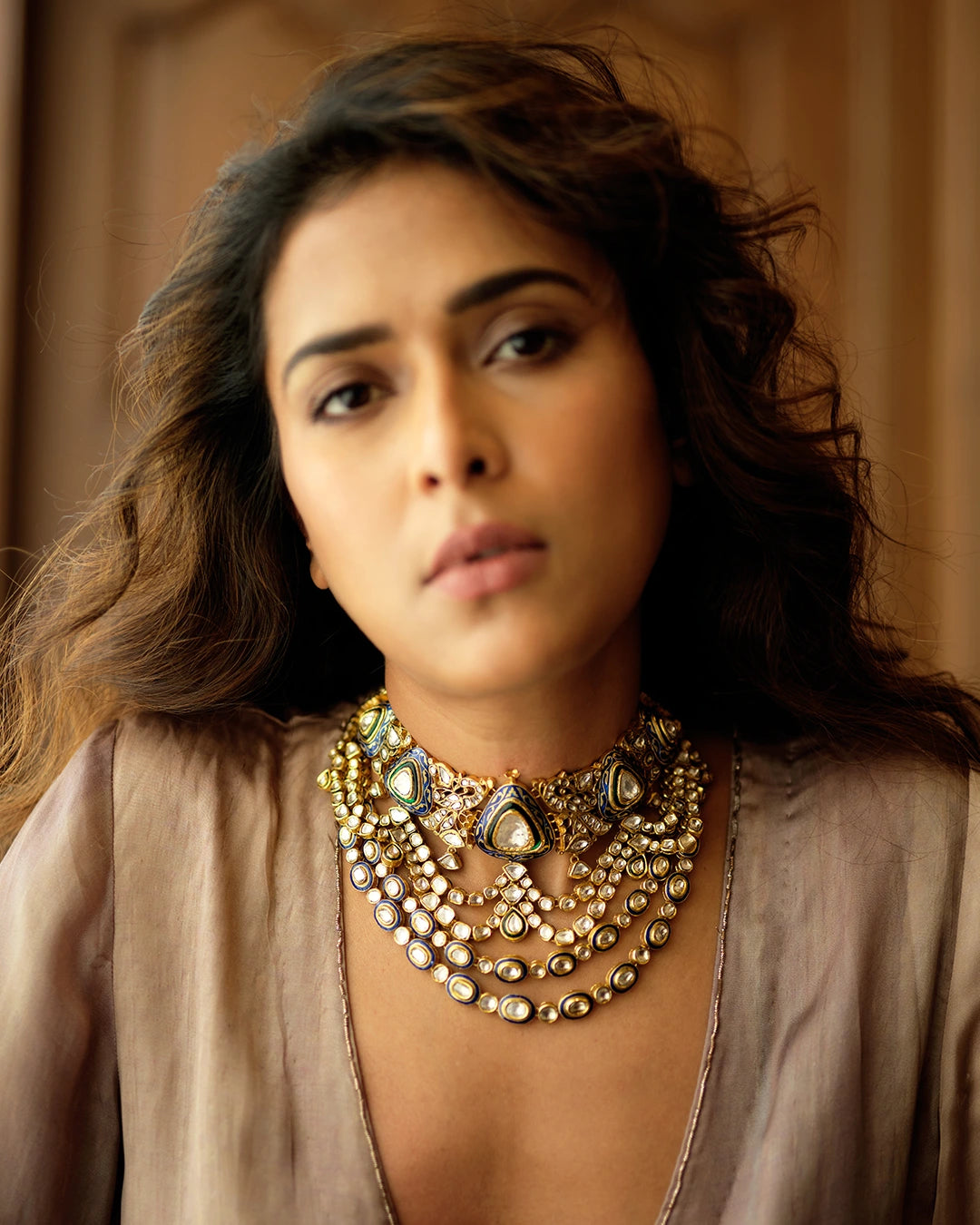
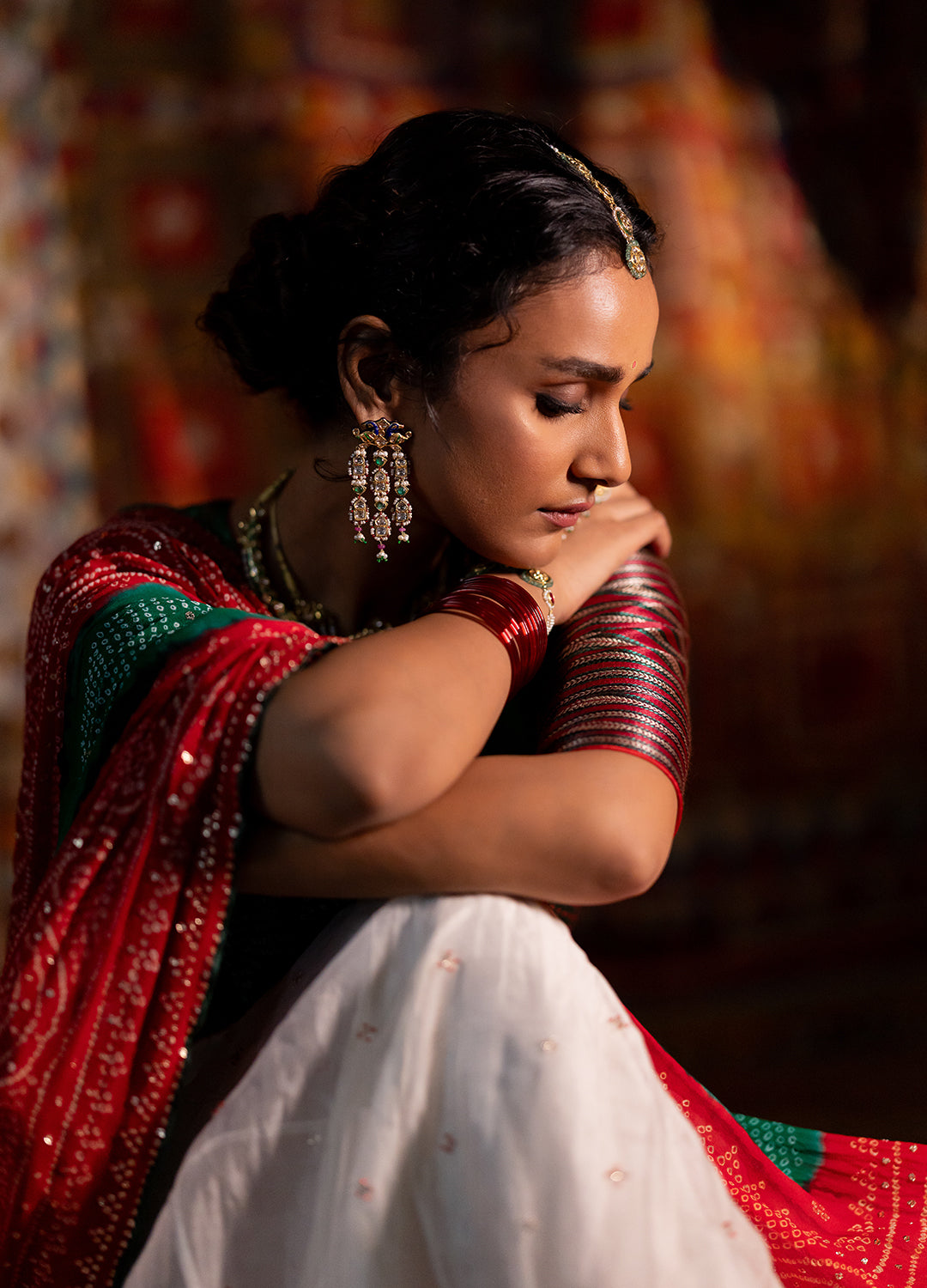
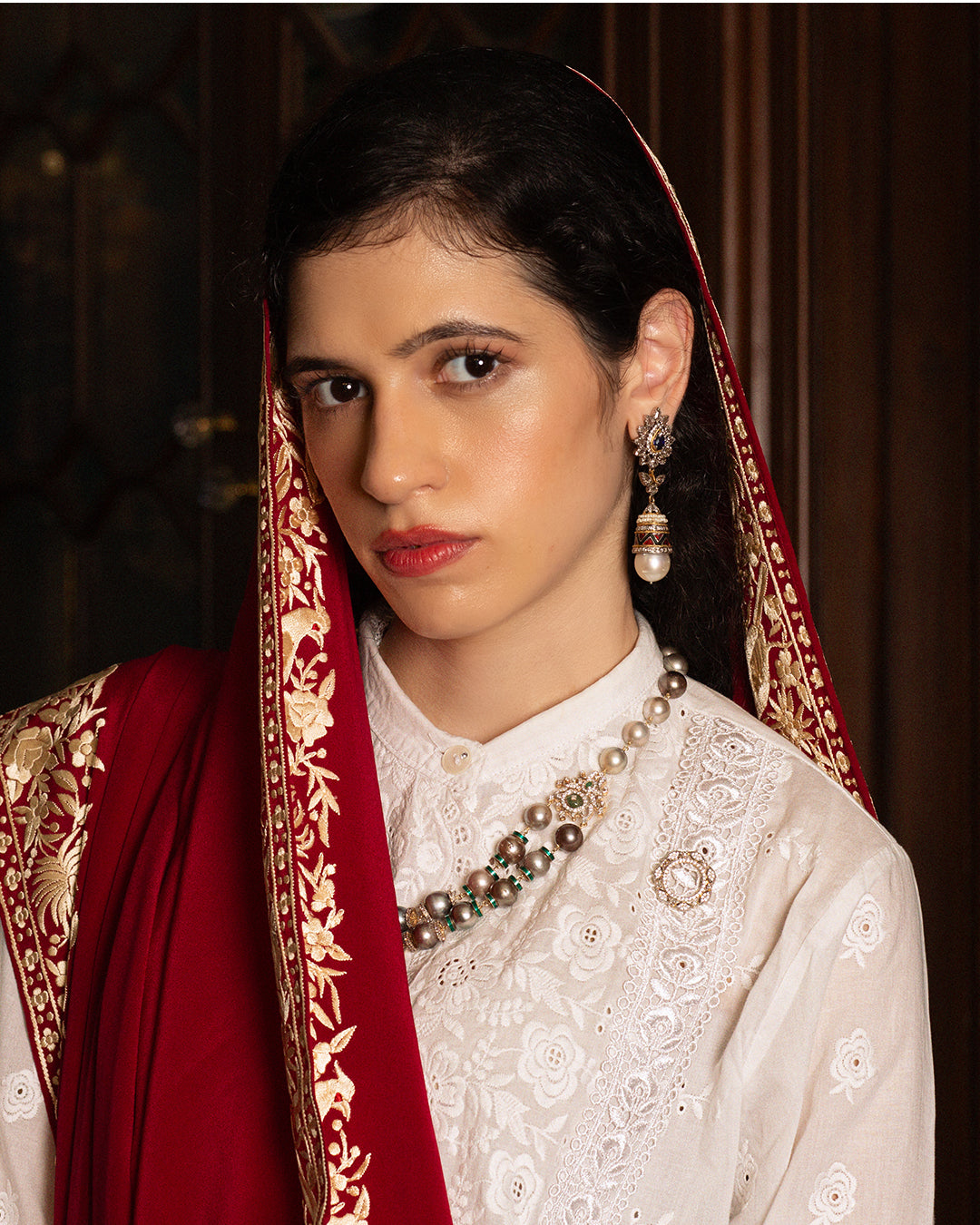
Think first about the story your lehenga is telling. A red, maroon or wine-toned lehenga lends itself naturally to the warmth of polki or kundan, with emerald accents adding a quiet depth. With pastels - blush, powder blue, peach or pistachio - the mood becomes softer, making room for delicate polki, pearls and subtle gemstones. An ivory lehenga becomes almost a canvas for the jewellery itself, where layered necklaces, intricate chokers and emerald-accented pieces can take centre stage.
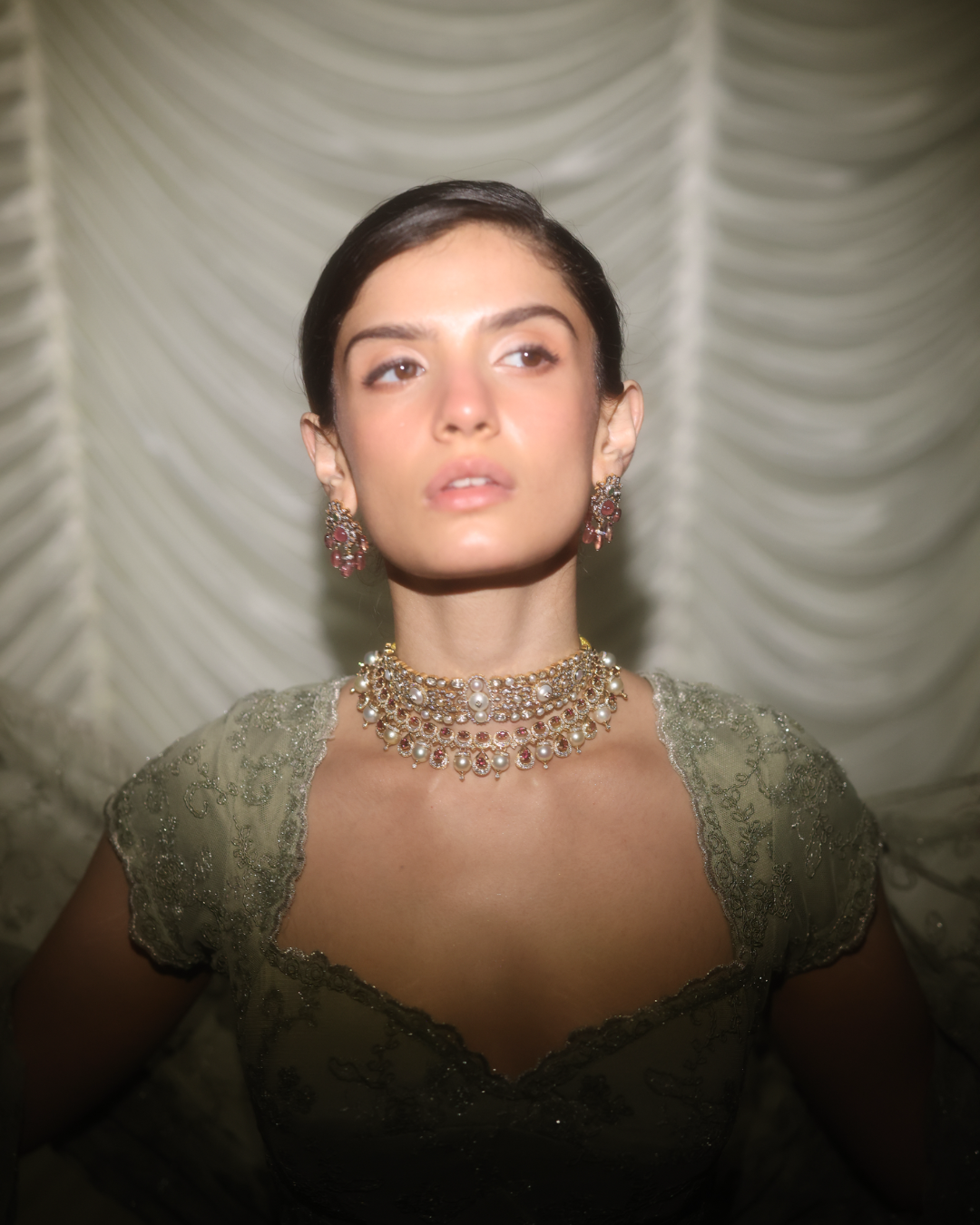
Then there is the question of scale. A heavily embroidered lehenga already carries a great deal of visual richness, so a single statement necklace or a pair of statement earrings is usually enough to complete the composition. A simpler silhouette invites layering instead. The neckline changes the conversation too: a deep V or sweetheart neckline suits a longer layered necklace, while a high or closed neckline is better served by a choker sitting above it, or by earrings alone.
Ultimately, your lehenga sets the tone; your jewellery gives it personality. It should enhance the embroidery, colour and silhouette rather than compete with them. Much like a miniature painting, where every detail has its place, a memorable bridal look comes from knowing when to add and when to leave space.
Years from now, when the photographs remain and the colours of the wedding have softened into memory, the jewellery should still feel like it belonged there - not simply to the lehenga, but to you.
A bridal trousseau is not built for one day. It begins with the wedding, but its story continues long after the celebrations have ended.
At Aurus, we look at your jewellery trousseau as a whole - the pieces you will wear across the wedding functions themselves, and the jewels that will accompany the occasions that follow. An heirloom-inspired polki necklace may become the piece you return to for family celebrations, while a pair of diamond earrings or a vibrant gemstone jewel quietly finds its place in everyday rituals and milestones.
The process begins with understanding you: your personal style, the traditions you hold close, the celebrations you have ahead, and the pieces you already own. From there, we help bring together jewels that speak to one another without ever feeling like they belong to a single moment.
The idea is not to collect more, but to collect meaningfully - choosing pieces with enough character to stand on their own and enough timelessness to be worn, remembered and eventually passed on.
The finest trousseau is not simply a collection of jewellery. Over time, it becomes an archive of the life you have lived, with each jewel holding a moment, a celebration and a story of its own.
The wedding may be the first chapter of a jewel's story, but it need not be its last. Bridal jewellery is meant to be re-worn - the question is simply how.
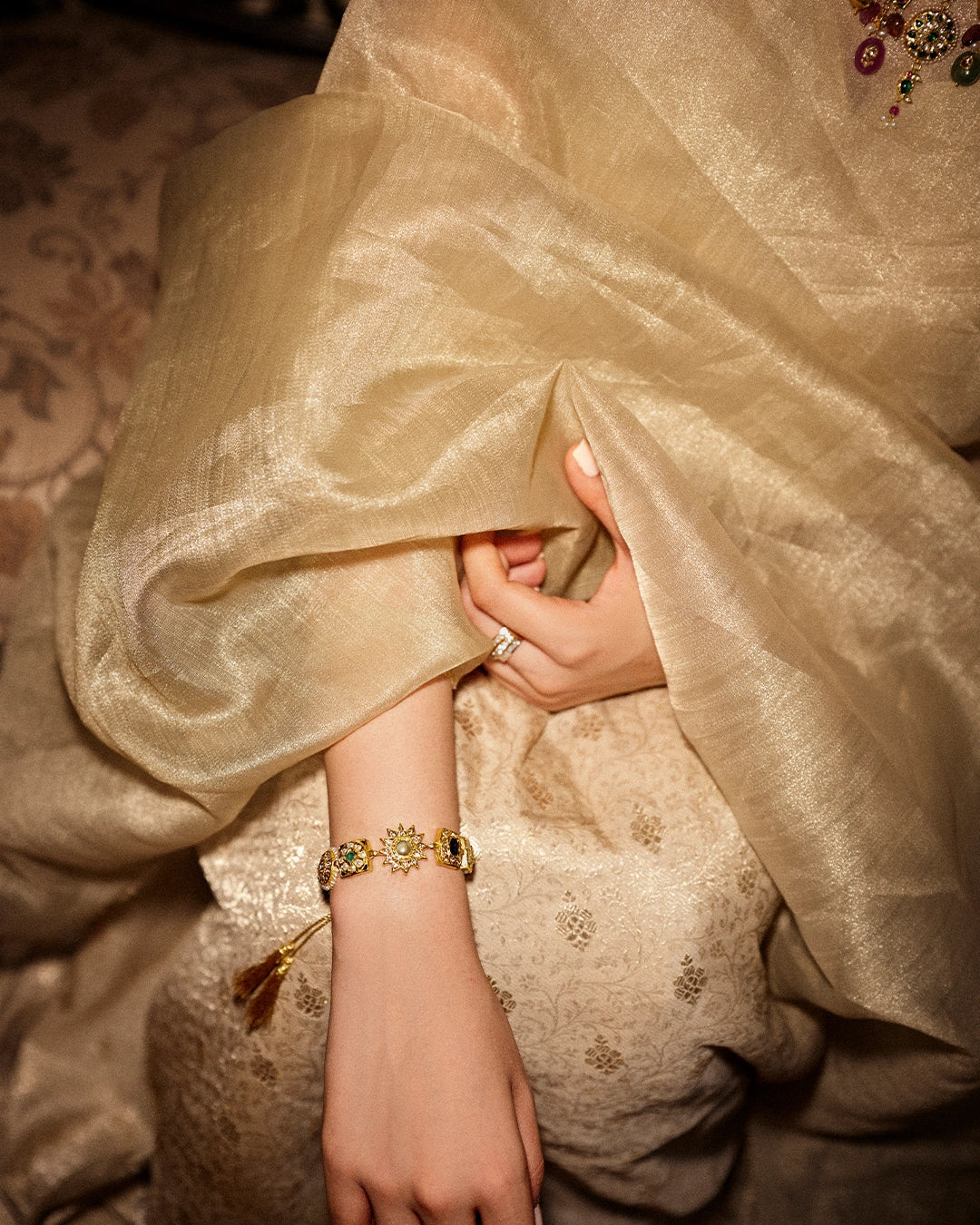
A bridal choker that once framed your wedding day can find a new life worn with a silk saree at a family celebration. A long necklace can be worn on its own, layered with finer chains, or paired with a simpler ensemble to let its details speak. Diamond earrings, bangles and rings move effortlessly between festive occasions and quieter evenings, while a maang tikka can be reset as a pendant or brooch and reserved for the moments that deserve something especially meaningful.
At Aurus, we believe the most beautiful jewellery is jewellery that evolves with you. The way you wear a piece can change as your life does - more traditional one day, unexpected and contemporary the next.
With every occasion, the jewel gathers something new. What began as part of your bridal trousseau slowly becomes part of your life: a first anniversary, a festival in your new home, a family wedding, a celebration yet to be imagined.
Because an heirloom is not simply something that is passed down. It is something that gathers stories along the way.
Before there is a necklace, a pair of earrings or a bridal suite, there is a conversation.
A bridal jewellery consultation with Aurus begins with getting to know the woman behind the wedding. You may already have your lehenga chosen, or perhaps only a colour, a mood, a place, or a feeling in mind. You may know exactly what you want to wear, or be beginning with nothing more than a collection of saved images. There is no right place to begin.
Through an in-depth, one-on-one conversation, our designers take time to understand your wedding, your personal style, the traditions you hold close and the way you want to feel on the day. Your functions, outfits, references and even the smallest details become part of the conversation, helping us see the wedding as a whole rather than simply choosing jewellery for an outfit.
From there, pieces begin to find their place - an heirloom alongside something new, a timeless polki necklace for the ceremony, or jewels that can continue to live beyond the celebrations.
Consultations take place at our Ahmedabad studio, and for brides outside India, the same conversation unfolds virtually, with the experience remaining just as personal and considered. You can book a bridal consultation through the Aurus website. There is no expectation to arrive with all the answers.
Sometimes the most beautiful bridal stories begin simply with a conversation - and time to imagine what yours could look like.
Perhaps the most striking bridal jewellery trend of 2026 is that brides are looking less towards what is new, and more towards what is worth keeping.
Brides are returning to the richness of Indian jewellery traditions - the depth of polki and kundan, the quiet luminosity of natural diamonds and pearls, and the colour of emeralds, rubies and other precious gemstones. Layering continues to have its place, with chokers, long haars and rani haars worn together to create a sense of abundance, but with a more considered eye. The influence may come from the grandeur of royal India, yet the way it is worn feels distinctly personal.
There is also a growing preference for bridal jewellery that does not belong exclusively to the wedding day. Brides are choosing pieces they can imagine wearing again - a necklace with a silk saree years later, earrings at a family celebration, or a jewel that might one day find its way into another trousseau.
Perhaps that is the most meaningful shift of all. Rather than following a prescribed idea of what a bride should wear, today's bride is choosing what holds meaning for her - mixing heritage with contemporary pieces, layering thoughtfully, and leaving room for individuality.
Because when jewellery is chosen well, it does not become a trend to look back on. It becomes part of the story you carry forward.